



Tire rotation on AWD is one of the simplest maintenance jobs that protects the transfer case, yet many owners ignore it. If your car has all-wheel drive (AWD, 4×4 or BMW xDrive), the tires are not only about grip: they work together with the transfer case and the differentials, and the way you wear, rotate and replace them can directly affect the drive system.
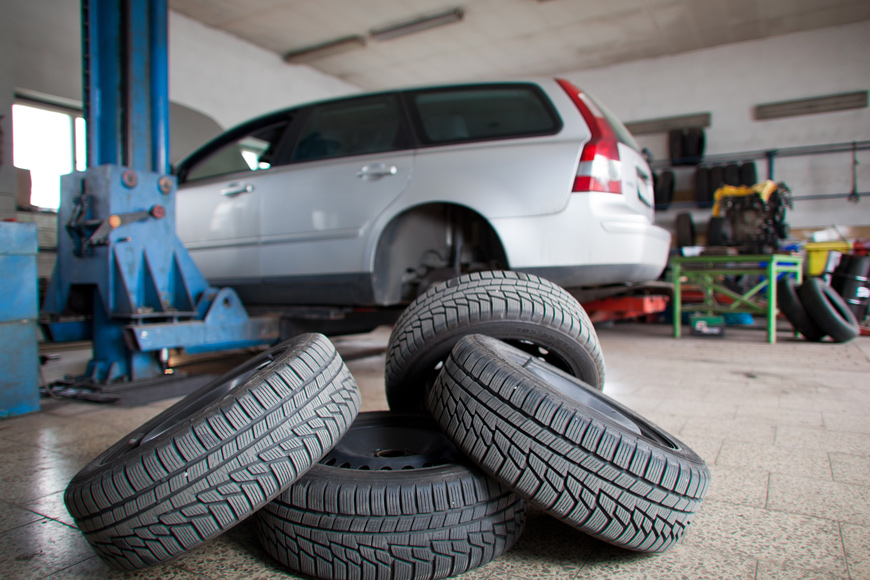
Why tire rotation on AWD matters
On an all-wheel-drive car, the four wheels are mechanically linked to each other through the transfer case and the differentials. The front tires have to cover the same distance as the rear ones, and that only happens if they have the same circumference. If the tires are worn to different degrees, their circumferences differ slightly and the wheels would have to turn at slightly different speeds. The system compensates, but over time this means extra strain, heat and accelerated wear on the transfer case and the differentials. Regular tire rotation on AWD keeps the wear even across all four tires and reduces that strain.
What creates differences between tires
Differences in circumference can come from several sources, and some are easy to miss:
- tires of different sizes fitted by mistake;
- tires worn to different tread depths;
- tires with a different tread pattern;
- tires from different manufacturers;
- different inflation pressures between wheels.
Some technical sources indicate that even a difference of about 1.6 mm (2/32 inch) in tread depth can influence how the system behaves. That is why replacing only two tires on an all-wheel-drive car is not recommended: new tires have a slightly larger diameter than worn ones, even when the marked size is the same, and the difference forces the system to work in constant compensation.
How often to rotate your tires
There is no single interval that suits every car. Many manufacturers indicate around 8,000–10,000 km, and a practical rule is to rotate the tires at every seasonal change or at the oil service. The safest approach is to follow your owner’s manual. If you drive a lot on difficult terrain, tow a trailer or drive in harsh winter conditions, check the wear more often.
How to rotate them correctly
- If the tires are non-directional and the same size on all wheels, they can be rotated crosswise or between axles, following the pattern in the manual.
- If they are directional (with an arrow on the sidewall), they stay on the same side of the car and are swapped only between front and rear.
- If the car has different sizes front and rear (common on sporty models), rotating between axles is not possible; ask your workshop which option applies to you.
During the rotation, also check the pressure (the same on all wheels, as shown on the car’s placard) and the wheel balance.
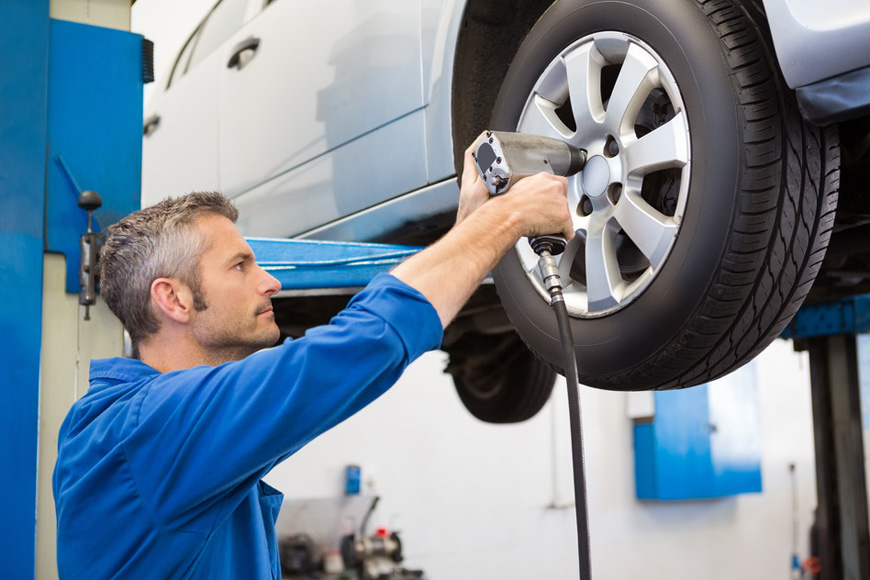
Why you replace the full set
On AWD it is recommended that all four tires have the same brand, the same model, the same size and wear that is as close as possible. If one is damaged and cannot be repaired, ask the workshop what difference in wear the manufacturer accepts; sometimes two or even four tires are replaced to avoid differences. A compact spare (temporary) wheel should only be used for short distances, as the manufacturer indicates.
Routine maintenance that protects the transfer case
Besides tire rotation on AWD, wheel alignment, correct pressure and tread depth also matter. The legal limit in Romania is 1.6 mm, but on an all-wheel-drive car it is worth not waiting until the limit, because very worn tires combined with newer ones put strain on the system again.
In practice, tire rotation on AWD costs little compared with repairing a transfer case or a differential, so it deserves a place in your maintenance schedule.
Signs that the tires have strained the transfer case
- noise or grinding in tight turns, especially at low speed
- vibrations under acceleration
- error messages related to the all-wheel-drive system
- oil leaks from the transfer case
You will find more detail in our articles Can tires affect the transfer case? and Faulty transfer case?.
What about the transfer case oil?
The transfer case has its own oil, which is changed at a different interval from the engine oil. The interval depends on the model and on how the car is used: towing, difficult terrain or driving through water call for more frequent checks. Check the manual and ask a specialised workshop for a recommendation; worn or insufficient oil speeds up wear.
Frequently asked questions
Can I replace only two tires? On AWD the full set is preferable. If that is not possible, tell the workshop that the car has all-wheel drive and ask for the manufacturer’s recommendation.
Does tire rotation fix a faulty transfer case? No. It prevents uneven wear, but if you already have symptoms, ask for a diagnosis.
Does pressure matter? Yes. Different pressures change the circumference of the wheels and can put strain on the system.
Read also
Do you need a transfer case?
Browse the transfer cases we have available or contact us on 0742 140 476. We will tell you honestly whether the part can be repaired or has to be replaced, and repaired products come with a 12-month warranty and an invoice.